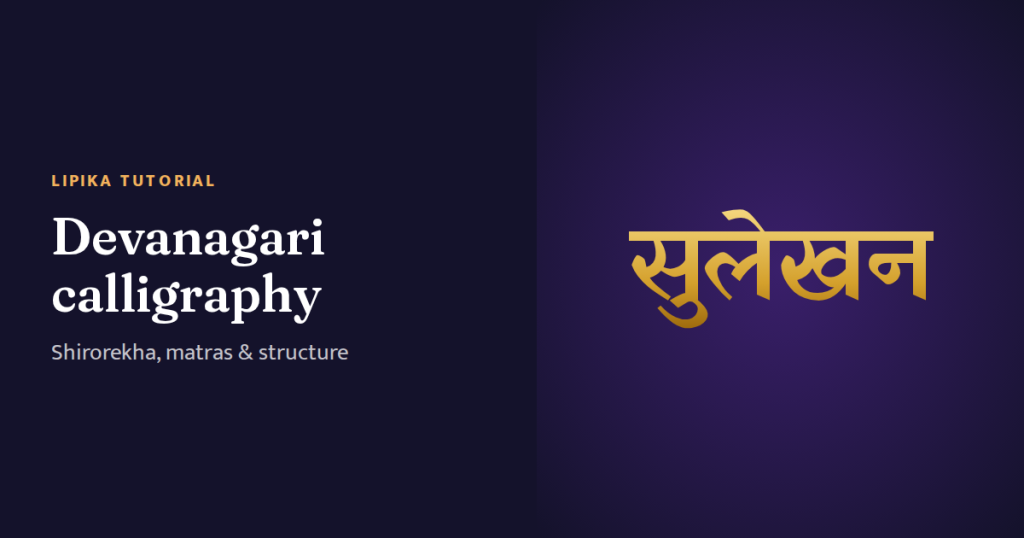
Devanagari is written below a continuous headline called the shirorekha. Getting the headline and the three zones right makes even simple letters look like calligraphy.
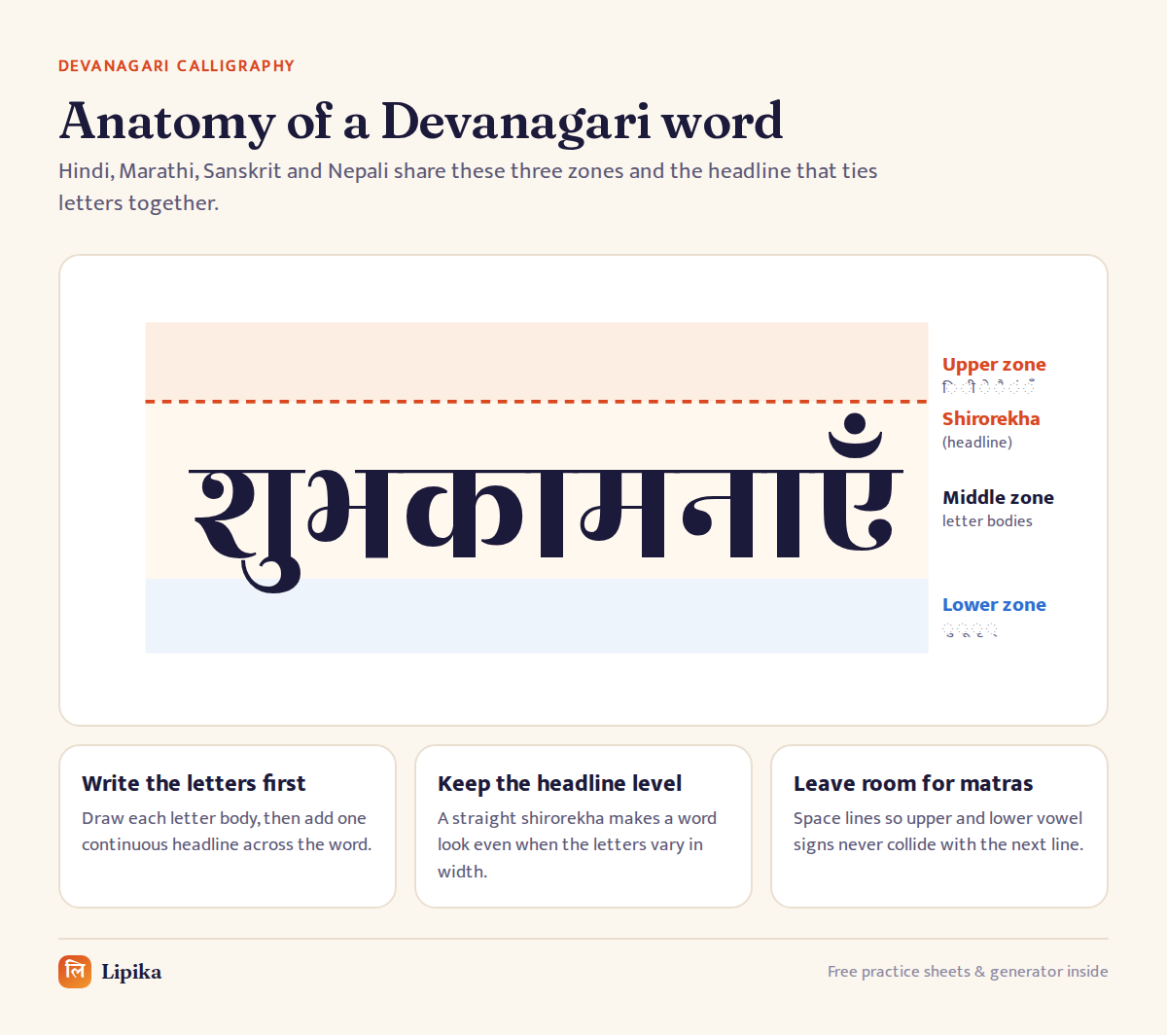
The three zones
- Upper zone: vowel signs such as ि ी े ै and the anusvara ं.
- Middle zone: the letter bodies, hanging from the headline.
- Lower zone: signs such as ु ू ृ and the virama ्.
Order of strokes
Write the body of each letter first, then add matras, and draw the headline last, in one steady stroke across the whole word. This keeps the headline straight even when letter widths vary.
Tips for a broad-edge pen
- Hold the nib at a shallow angle so the headline comes out thick and vertical stems medium.
- Keep vertical stems (like in प, म, न) parallel and evenly spaced.
- Give conjuncts such as क्ष, त्र, ज्ञ and श्र extra width so they stay readable.
- Marathi uses ळ and its own spellings (for example दिवाळी), so check the word before you letter it.
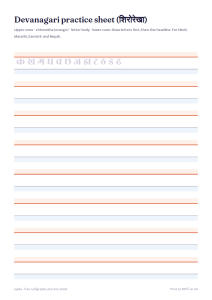
Devanagari practice sheet (shirorekha)
Free A4 PDF. Print at 100% and practise with a pencil first.
Keep going
Download all free practice sheets, or turn your words into calligraphy right now in the free generator.