Arabic calligraphy has several classical styles, each with its own proportions, rhythm and purpose. Here is a quick guide to recognising them.
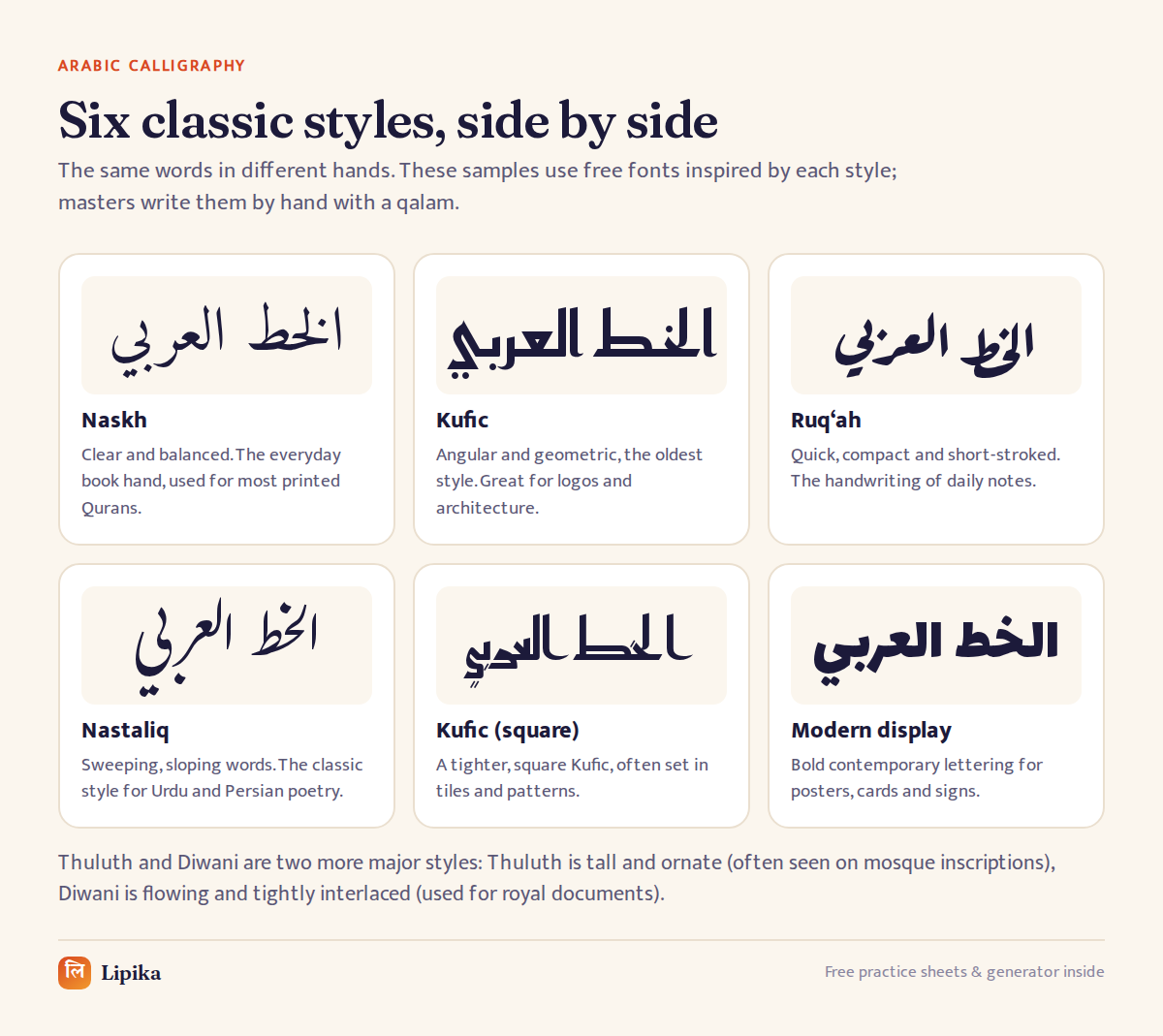
- Naskh: clear and rounded, the standard book hand. Choose it for long texts and verses where readability matters.
- Thuluth: tall, sweeping and ornate, famous on mosque inscriptions and title pages.
- Kufic: the oldest style, angular and geometric. Great for logos, tiles and architecture.
- Diwani: flowing, slanted and tightly interlaced, developed for royal documents.
- Ruq‘ah: compact and quick, the everyday handwriting style.
- Nastaliq: hanging, sloping words with long horizontal strokes. The classic style for Urdu and Persian.
Proportions with the rhombic dot
Traditional calligraphers measure letters in rhombic dots made by their own qalam. The height of the alif sets the scale for every other letter. Naskh is often taught with an alif of about five dots; taller styles like Thuluth use more.
Writing sacred text
When you letter verses of the Quran, copy the text from a trusted source, keep every mark (harakat), and proofread before you print or share. Our Bismillah and Ayatul Kursi pages use the verified Tanzil text.
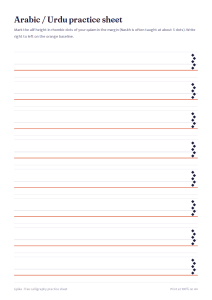
Arabic / Urdu practice sheet
Free A4 PDF. Print at 100% and practise with a pencil first.
Keep going
Download all free practice sheets, or turn your words into calligraphy right now in the free generator.