Calligraphy is the art of writing letters with deliberate, consistent strokes. It is less about “nice handwriting” and more about repeating the same few shapes until they become even and confident. The good news: you can start with one cheap pen and a printer.
Pick one tool and stick with it
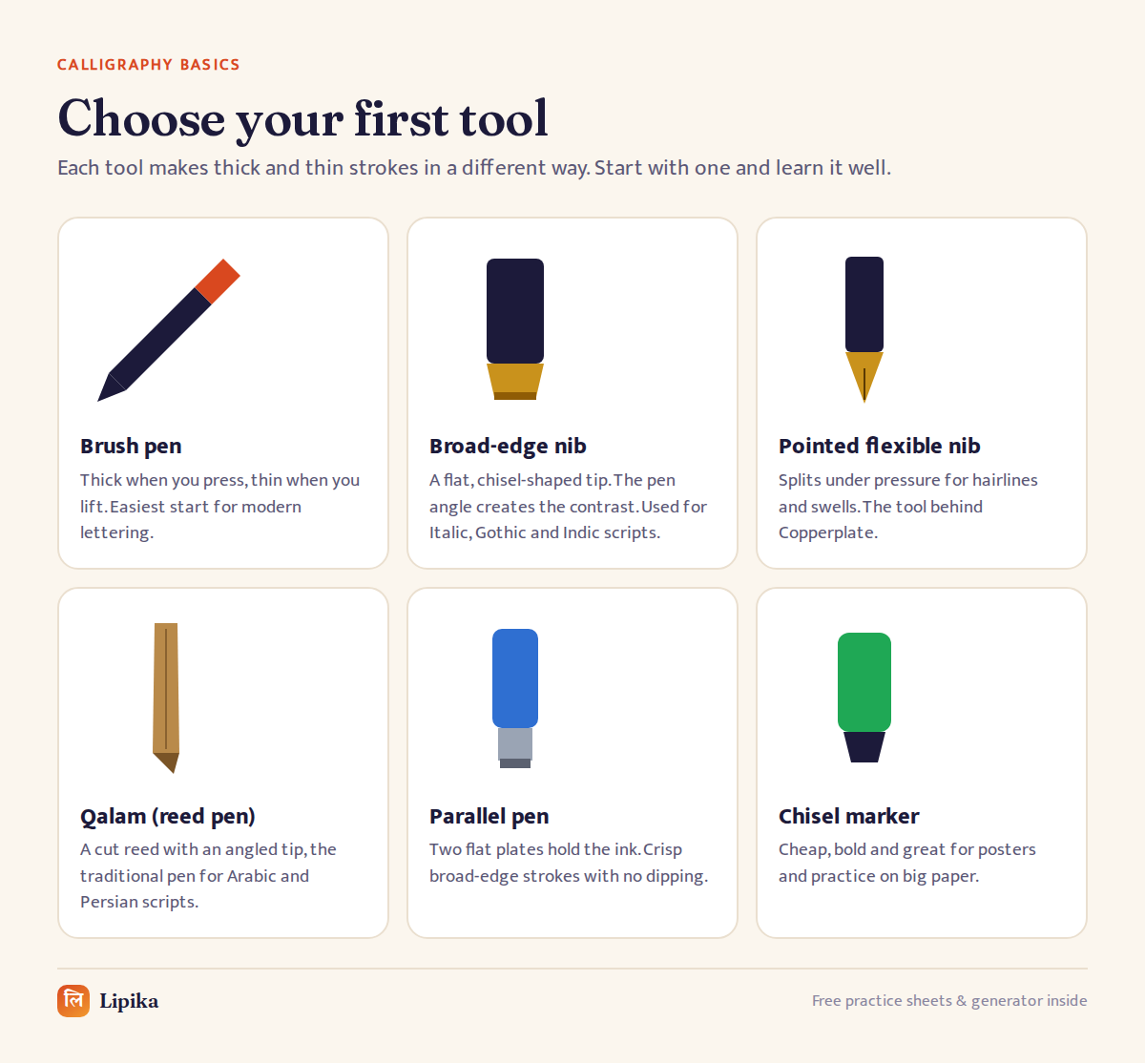
For modern lettering in English, a small brush pen is the easiest start. For Italic, Gothic, Devanagari and other Indian scripts, a broad-edge tool (parallel pen, chisel marker or dip nib) teaches you thick-and-thin contrast through pen angle. Arabic and Urdu are traditionally written with a cut reed or bamboo qalam.
Set up your space
- Use smooth paper so the pen doesn’t fray (laser-printer paper works for practice).
- Sit upright with both feet on the floor and the paper slightly angled.
- Light from the side opposite your writing hand avoids shadows.
- Print a guideline sheet so every letter sits on the same lines.
Hold the pen at a steady angle
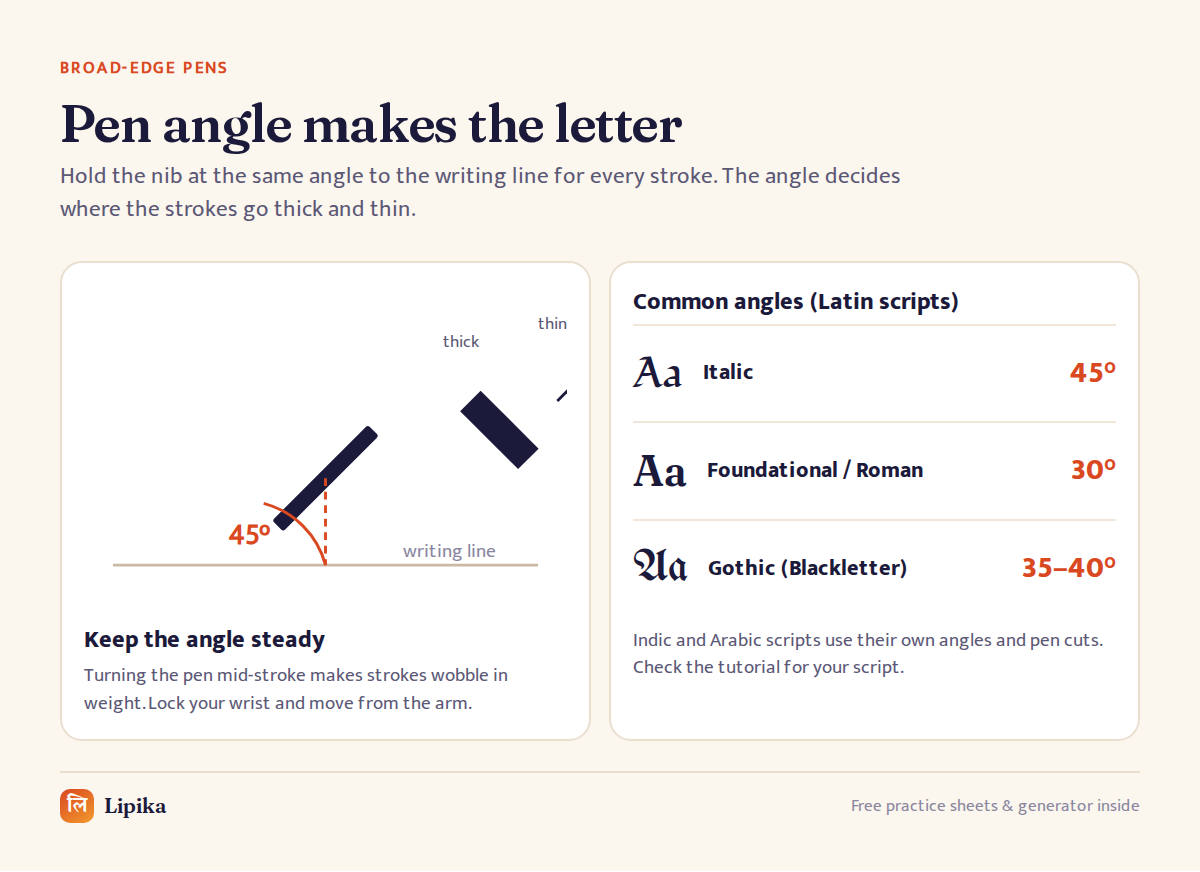
With a broad-edge pen, the angle between the nib and the writing line decides where strokes are thick or thin. Choose the angle for your style and keep it fixed. Move from your forearm, not just your fingers.
A 15-minute daily routine
- 3 minutes: warm-up lines and ovals, slowly.
- 7 minutes: one letter group (for example, letters built from the same stroke).
- 5 minutes: write one real word you care about, such as a name or a greeting.
Slow, even strokes beat fast, wobbly ones. Compare today’s page with last week’s rather than with experts.
Common beginner mistakes
- Pressing hard on upstrokes (keep them light and thin).
- Changing the pen angle mid-letter.
- Skipping guidelines, which makes heights drift.
- Writing too fast: calligraphy is drawing letters, not writing them.
Keep going
Download all free practice sheets, or turn your words into calligraphy right now in the free generator.